
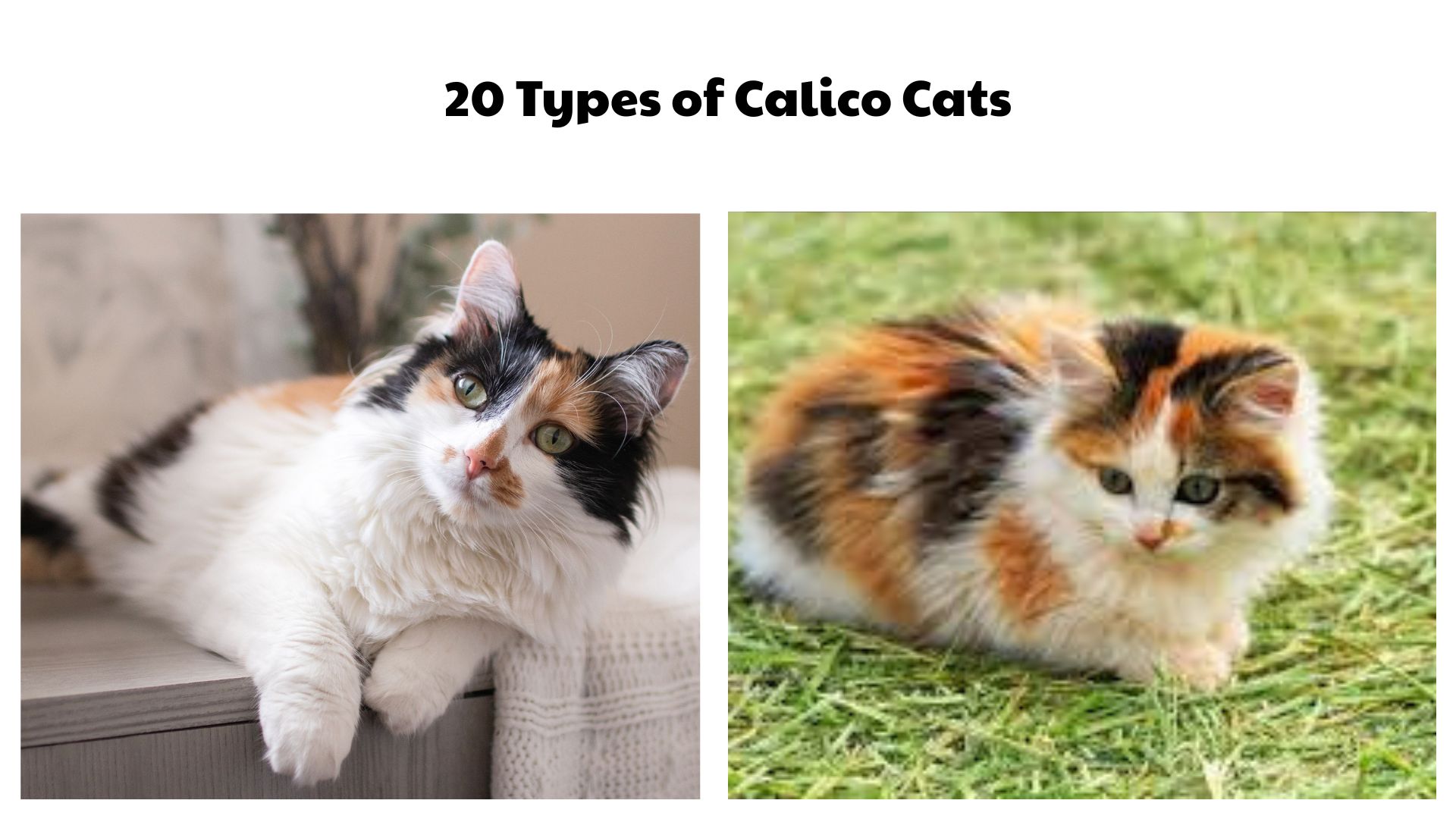
The Types of Calico Cats are among the most colorful and visually stunning feline variations in the world. Calico Cats are not a breed but a coat pattern made up of three main colors—white, black, and orange (or their diluted versions). Because this pattern can appear in many different breeds, Calico Cats come in a wide variety of shapes, coat lengths, and personalities. This guide explores the most well-known Types of Calico Cats, helping cat lovers easily identify each variation and understand what makes them unique. Whether you are a new cat owner or a long-time feline enthusiast, Calico Cats are always fascinating due to their rarity, beauty, and genetic complexity.
20 Types of Calico Cats

1. Traditional Calico Cat
The Traditional Calico Cat is the most well-known among all Types of Calico Cats. It features a striking combination of white, black, and orange patches that are clearly separated rather than blended. This creates a bold and high-contrast appearance that is instantly recognizable.
Each Traditional Calico Cat has a completely unique pattern, meaning no two cats look the same. Some may have large blocks of color, while others may have smaller scattered patches across their body. The white base plays an important role in making the orange and black colors stand out vividly.
In terms of personality, Traditional Calico Cats are often described as confident, independent, and expressive. Many owners refer to their strong-willed nature as “calico attitude,” similar to the “tortitude” seen in tortoiseshell cats. They are affectionate but tend to choose when and how they interact.
They adapt well to indoor environments and enjoy interactive toys, climbing structures, and mental stimulation. Without engagement, they may become bored or vocal.
To identify a Traditional Calico Cat, look for clear patches of white, black, and orange with strong separation between colors.
2. Dilute Calico Cat
The Dilute Calico Cat is one of the softer-looking Types of Calico Cats. Instead of strong black and orange colors, this variation features muted tones such as gray, cream, and light peach. The overall appearance is gentle, pastel-like, and visually soothing.
This color variation is caused by a dilution gene that reduces pigment intensity in the coat. As a result, the cat’s pattern looks more blended and less sharply contrasted than a traditional calico.
Despite their softer appearance, Dilute Calico Cats often share similar personalities with classic calicos. They can be playful, intelligent, and sometimes independent. Many are affectionate but prefer interaction on their own terms.
They are well-suited for calm households where routines are stable and attention is consistent. Their gentle appearance often matches their more relaxed visual impression.
To identify a Dilute Calico Cat, look for soft gray, cream, and pale orange patches instead of bold black and bright orange.
3. Caliby (Calico Tabby Cat)
The Caliby Cat, also known as the Calico Tabby Cat, is one of the most detailed and visually complex Types of Calico Cats. It combines calico coloring with tabby striping, meaning the cat has both patchy color blocks and visible striped patterns within those patches.
This creates a highly textured coat where orange or gray tabby stripes may appear beneath white or black areas. The result is a wild, natural look that resembles a mix between a calico and a wild tabby cat.
Caliby Cats are known for being curious, active, and intelligent. They enjoy exploring their environment and are often more playful than standard calico cats. Their tabby influence gives them a slightly more social and outgoing personality.
They thrive in homes where they receive stimulation, toys, and interactive playtime. Without engagement, they may become bored or restless.
To identify a Caliby Cat, look for calico coloring combined with visible tabby stripes in at least one or more color patches.
4. Tortico (Tortoiseshell Calico Cat)
The Tortico Cat, also known as the Tortoiseshell Calico Cat, is a fascinating hybrid among the Types of Calico Cats. It combines the blended color pattern of a tortoiseshell cat with the white spotting of a calico cat.
Unlike traditional calicos, where colors are clearly separated, Tortico Cats often have more blended black and orange areas, with white patches breaking up the mix. This creates a unique hybrid appearance that looks both mottled and structured at the same time.
Tortico Cats are often described as having strong personalities. They can be affectionate but also independent and selective about attention. Many owners report a playful yet assertive behavior pattern.
They are highly adaptable and do well in indoor environments where they can receive mental stimulation and social interaction.
To identify a Tortico Cat, look for a tortoiseshell-style blended coat combined with clear white markings.
5. Tabico (Tabby Calico Mix)
The Tabico Cat is one of the most visually dynamic Types of Calico Cats. It is a mix of tabby and calico patterns, where the cat displays both striped tabby markings and classic calico color patches in a single coat.
This results in a layered and complex appearance where stripes and patches overlap in different areas of the body. Some Tabico Cats may even show faint “M” markings on the forehead, a classic tabby trait.
Tabico Cats are typically energetic, curious, and highly intelligent. They enjoy exploring new spaces and interacting with toys or humans. Their personality is often more active compared to traditional calicos.
They are excellent companions for families who can provide stimulation, attention, and interactive play.
To identify a Tabico Cat, look for a combination of tabby stripes and calico-style white, black, and orange patches within the same coat.
6. Smoke Calico Cat
The Smoke Calico Cat is one of the most visually dramatic Types of Calico Cats. This variation is defined by a unique “smoke” effect, where each hair strand has a lighter base and darker tip. When combined with calico coloring, it creates a layered, almost glowing appearance where black, orange, and white patches appear deeper and more dimensional than usual.
The smoke effect is caused by a specific genetic trait that affects pigment distribution along the hair shaft. Instead of being solid in color, the coat appears to shift slightly when the cat moves or when lighting changes. This gives Smoke Calico Cats a mysterious and elegant look that stands out among other calico variations.
In personality, Smoke Calico Cats are often observant, intelligent, and slightly reserved at first. Once they feel safe, they become affectionate and loyal companions. They tend to prefer calm environments where they can relax and observe their surroundings.
They are well-suited for indoor living and enjoy predictable routines. Interactive toys and gentle play help keep them mentally stimulated.
To identify a Smoke Calico Cat, look for dark-tipped fur with a lighter undercoat combined with traditional calico color patches.
7. Harlequin Calico Cat
The Harlequin Calico Cat is one of the most striking Types of Calico Cats, known for its large, irregular patches of color. Unlike traditional calicos with smaller scattered markings, Harlequin Calicos feature bold blocks of white, black, and orange spread across the body in a more dramatic and artistic layout.
This pattern often gives the impression of a “painted” cat, where colors are intentionally placed in large sections. The name “Harlequin” reflects this theatrical and eye-catching appearance.
Harlequin Calico Cats are typically confident, playful, and expressive. They enjoy interacting with humans and are often more outgoing than softer-patterned calicos. Many owners describe them as curious and attention-seeking in a friendly way.
They do well in active households where they can explore, climb, and engage in daily play sessions.
To identify a Harlequin Calico Cat, look for large, well-defined patches of white, orange, and black with minimal blending between colors.
8. Calico and White Cat
The Calico and White Cat is one of the most common Types of Calico Cats. While all calicos include white by definition, this variation specifically emphasizes larger white areas that dominate the coat, with black and orange patches appearing more as accents.
The increased amount of white creates a brighter, more open appearance compared to traditional calicos. The colored patches may appear on the head, back, or tail, while the rest of the body remains mostly white.
These cats often have balanced personalities. They are friendly, affectionate, and generally easy to live with. While they may still show independent traits typical of calicos, they are often more adaptable and relaxed in social environments.
They are excellent family pets and tend to adjust well to households with children or other animals when properly introduced.
To identify a Calico and White Cat, look for a mostly white coat with distinct black and orange patches in key areas.
9. Tuxedo Calico Cat
The Tuxedo Calico Cat is a unique and less common variation among the Types of Calico Cats. It combines calico coloring with tuxedo-like black and white patterns, often creating a more structured and formal appearance.
In many cases, the cat may have a dark “jacket” pattern with white chest and belly areas, while also featuring orange patches layered into the coat. This mixture creates a visually complex and elegant look.
Tuxedo Calico Cats are often intelligent, confident, and social. They may enjoy human interaction and can be quite expressive in their communication. Their personality often reflects a mix of curiosity and independence.
They adapt well to indoor environments and enjoy enrichment activities such as puzzle toys and climbing structures.
To identify a Tuxedo Calico Cat, look for black-and-white tuxedo markings combined with orange calico patches.
10. Van Pattern Calico Cat
The Van Pattern Calico Cat is one of the rarest and most visually distinct Types of Calico Cats. In this pattern, most of the cat’s body is white, with color concentrated mainly on the head and tail.
This creates a highly symmetrical and elegant appearance, often making the cat look like it has been delicately painted at both ends. The term “Van” comes from the Turkish Van breed, which commonly displays this pattern.
Van Calico Cats are typically active, intelligent, and playful. They enjoy movement and exploration, often showing curiosity about their environment. Despite their elegant appearance, they can be quite energetic and social.
They do best in homes where they have space to explore and receive regular interaction.
To identify a Van Pattern Calico Cat, look for a mostly white body with colored patches restricted mainly to the head and tail regions.
11. Long-Haired Calico Cat
The Long-Haired Calico Cat is one of the most visually luxurious Types of Calico Cats. It is not a single breed but a coat pattern that appears in long-haired breeds such as Persian, Maine Coon, and domestic longhair cats. What makes this variation special is the way the calico pattern interacts with long, flowing fur, creating a soft, layered, and highly textured appearance.
Unlike short-haired calicos, where color blocks appear clearly defined, long-haired calicos often show a more blended and flowing distribution of white, black, and orange. The movement of the fur adds depth to the pattern, making the colors appear to shift as the cat walks or turns. This creates a dynamic visual effect that many cat lovers find mesmerizing.
From a grooming perspective, Long-Haired Calico Cats require more maintenance than short-haired varieties. Their coats are prone to tangling and matting, especially in areas like the chest, belly, and behind the ears. Regular brushing—ideally several times per week—is necessary to keep the coat healthy and smooth.
In terms of personality, these cats often inherit traits from their underlying breed. Persian-based calicos may be calm and gentle, while Maine Coon calicos tend to be more playful and social. However, many long-haired calicos still exhibit the characteristic calico independence and strong-willed behavior.
They adapt well to indoor environments and enjoy stable routines. Because of their luxurious appearance, they are often considered show-quality cats in breeding standards.
To identify a Long-Haired Calico Cat, look for a flowing coat with visible tri-color patterns and breed-specific long fur characteristics.
12. Short-Haired Calico Cat
The Short-Haired Calico Cat is one of the most common and widely recognized Types of Calico Cats. With a sleek, close-lying coat, this variation clearly displays the classic tri-color pattern of white, black, and orange without obstruction from long fur.
Because the fur is shorter and smoother, the calico patches appear more defined and sharply contrasted. This makes Short-Haired Calicos especially striking in appearance, as each color section stands out clearly against the others.
These cats are low-maintenance compared to long-haired varieties, requiring only occasional brushing. This makes them ideal for owners who want a visually stunning cat without intensive grooming needs.
Personality-wise, Short-Haired Calico Cats are often confident, intelligent, and independent. Many display a strong personality, commonly referred to as “calico attitude,” where they decide when to engage with people and when to observe from a distance.
They are highly adaptable and do well in various living environments, including apartments and family homes. Their curiosity and intelligence make them quick learners, especially when motivated by treats or attention.
To identify a Short-Haired Calico Cat, look for a smooth, short coat with clear and distinct tri-color patches.
13. Male Calico Cat (Rare Genetic Calico)
The Male Calico Cat is one of the rarest and most scientifically fascinating Types of Calico Cats. Unlike female calicos, which are common due to X chromosome genetics, male calicos occur in extremely rare cases—often due to an extra X chromosome (XXY genetic pattern).
Because of this genetic anomaly, male calico cats are typically sterile and appear only in about 1 in 3,000 calico births. Their coat displays the same tri-color pattern of white, black, and orange, but their biological makeup makes them highly unusual in the feline world.
In terms of appearance, male calicos are just as visually striking as females, often showing bold and well-defined patches. However, their rarity makes them highly sought after and often studied in genetics research.
Personality traits vary widely depending on breed and environment. They do not inherently behave differently from female calicos, but they are often described as friendly, social, and curious when raised in stable environments.
Because of their rarity, male calico cats are not commonly bred intentionally and usually occur naturally through genetic variation.
To identify a Male Calico Cat, look for a tri-color coat combined with male physical traits such as a broader head and more muscular build, confirmed by veterinary genetics.
14. Japanese Bobtail Calico Cat
The Japanese Bobtail Calico Cat is one of the most culturally iconic Types of Calico Cats. In Japan, calico Japanese Bobtails are considered symbols of good luck and prosperity, often represented in the famous “Maneki Neko” (beckoning cat) figurines.
This breed is characterized by its short, rabbit-like tail and elegant, athletic body. When combined with the calico pattern, the result is a highly symbolic and visually distinctive cat with strong cultural significance.
The calico pattern in Japanese Bobtails is often well-balanced, with distinct white, black, and orange areas distributed across the body. Their short tails may also display mixed coloration, adding to their charm.
In terms of personality, Japanese Bobtail Calico Cats are active, intelligent, and highly social. They are known for being playful well into adulthood and enjoy interactive games and human companionship.
They adapt well to families and are often described as “dog-like” due to their loyalty and responsiveness to owners.
To identify a Japanese Bobtail Calico Cat, look for a short pom-pom tail, slender body, and a well-defined tri-color coat.
15. Maine Coon Calico Cat
The Maine Coon Calico Cat is one of the largest and most majestic Types of Calico Cats. It combines the massive size, tufted ears, and long, shaggy fur of the Maine Coon breed with the vibrant calico color pattern.
This creates a dramatic and powerful appearance where large patches of white, black, and orange spread across a thick, textured coat. The size of the Maine Coon often makes the calico pattern appear more stretched and natural, resembling a wild forest cat.
Despite their imposing size, Maine Coon Calicos are known for being gentle giants. They are friendly, affectionate, and highly social, often enjoying interaction with humans, children, and even other pets.
They are intelligent and playful, frequently engaging in games and exploring their environment. Their dog-like personality makes them one of the most beloved large cat breeds.
Grooming is essential due to their long and dense fur, which can become tangled without regular care.
To identify a Maine Coon Calico Cat, look for a large, muscular cat with tufted ears, a bushy tail, and a long-haired tri-color coat.
16. Persian Calico Cat
The Persian Calico Cat is one of the most elegant Types of Calico Cats, combining the long, luxurious coat of the Persian breed with the striking tri-color calico pattern. This variation is highly valued for its soft, flowing fur that displays white, black, and orange tones in a blended yet visually rich arrangement.
Unlike short-haired calicos, Persian Calicos often appear more “painted” than sharply defined. The long fur allows colors to overlap slightly, creating a soft gradient effect, especially around the chest, tail, and belly. This makes each cat look like a living piece of art with constantly shifting patterns as they move.
In terms of personality, Persian Calico Cats are generally calm, gentle, and affectionate. They prefer peaceful environments and enjoy predictable routines. While they can be loving companions, they are not overly demanding and often enjoy quiet companionship rather than constant interaction.
Because of their long fur, grooming is essential. Daily brushing helps prevent tangles and keeps their coat in healthy condition. Without regular care, their fur can easily mat, especially in humid environments.
To identify a Persian Calico Cat, look for a flat-faced Persian structure combined with long, dense fur and a soft tri-color pattern.
17. British Shorthair Calico Cat
The British Shorthair Calico Cat is one of the most structured and plush-looking Types of Calico Cats. This breed is known for its round face, dense coat, and sturdy body, which gives the calico pattern a very balanced and symmetrical appearance.
The tri-color pattern on British Shorthairs often appears more evenly distributed compared to other breeds. The short, dense fur makes the white, black, and orange patches stand out clearly, creating a soft but well-defined mosaic look.
These cats are known for their calm and easygoing temperament. British Shorthair Calicos are typically independent but affectionate in a subtle way. They are not overly clingy and often prefer sitting near their owners rather than being constantly handled.
They are ideal for quiet households and adapt well to indoor living. Their low-maintenance grooming needs make them popular among cat owners who want both beauty and convenience.
To identify a British Shorthair Calico Cat, look for a round face, dense plush coat, and evenly spread tri-color markings.
18. Domestic Mixed Breed Calico Cat
The Domestic Mixed Breed Calico Cat is one of the most common yet diverse Types of Calico Cats. These cats do not belong to a specific pedigree breed but instead come from mixed genetic backgrounds, which makes each one completely unique in body shape, coat texture, and personality.
Despite their mixed heritage, they still display the classic calico pattern of white, black, and orange. However, the distribution of these colors can vary widely—from large bold patches to small scattered markings.
Because of their genetic diversity, Domestic Mixed Breed Calicos can have a wide range of personalities. Some are highly social and playful, while others are independent and reserved. This makes them unpredictable but also very interesting companions.
They are adaptable to many environments and are commonly found in homes, shelters, and outdoor cat populations. Their resilience and flexibility make them excellent companions for many types of owners.
To identify a Domestic Mixed Breed Calico Cat, look for a non-pedigree cat with a tri-color coat and varied body structure.
19. Soft Pattern Calico Cat (Low-Contrast Calico)
The Soft Pattern Calico Cat is one of the more subtle Types of Calico Cats, featuring low-contrast coloring where white, black, and orange tones blend more gently than in traditional calicos. Instead of bold, separated patches, the colors may appear softened or slightly mixed at the edges.
This variation often results from dilution genetics or subtle coat blending in mixed breeds. The overall appearance is more muted and pastel-like, making these cats visually gentle and calming to observe.
Personality-wise, Soft Pattern Calico Cats are often balanced and adaptable. They are usually affectionate but not overly demanding, making them suitable for a wide range of households. Many enjoy quiet companionship and light play sessions.
They do not require special care beyond standard grooming and attention, making them easy to manage for first-time cat owners.
To identify a Soft Pattern Calico Cat, look for muted tri-color markings with less contrast and softer transitions between colors.
20. High-Contrast Bold Calico Cat
The High-Contrast Bold Calico Cat is one of the most visually striking Types of Calico Cats. It features sharply defined patches of white, deep black, and vibrant orange, with minimal blending between colors. This creates a dramatic and eye-catching appearance.
Each color section is clearly separated, often forming large, well-defined blocks across the body. This makes the cat look almost like it has been painted with deliberate brush strokes.
These cats often have strong personalities, characterized by confidence, intelligence, and independence. They are expressive and may be more vocal or attention-seeking compared to softer-patterned calicos.
They thrive in environments where they receive stimulation, interaction, and structured routines. Without engagement, they may become bored or restless.
To identify a High-Contrast Bold Calico Cat, look for sharp, clearly separated white, black, and orange patches with strong visual definition.
Conclusion
The Types of Calico Cats represent one of the most colorful and genetically fascinating coat patterns in the feline world. Unlike standardized cat breeds, calico is a naturally occurring color combination that can appear in many different breeds, coat lengths, and body structures. This is why every calico cat looks completely unique, with no two patterns ever being identical.
From traditional calicos with bold white, black, and orange patches to diluted pastel versions, tabby-influenced calicos, and rare breed-specific variations like Persian, Maine Coon, and Japanese Bobtail calicos, the diversity within this category is remarkable. Each variation shows how genetics can create endless artistic combinations in a single coat pattern.
Beyond appearance, Calico Cats are also known for their strong personalities. Many owners describe them as confident, expressive, and independent, often forming deep bonds with their humans while maintaining a distinct sense of individuality. This balance of beauty and personality is what makes them so beloved around the world.
Ultimately, exploring the Types of Calico Cats helps us appreciate how nature creates unique living artworks through genetics. Whether bold, soft, rare, or common, every calico cat carries a one-of-a-kind pattern that cannot be duplicated. Which calico type do you think best fits your personality?
Frequently Asked Questions About Types of Calico Cats
1. What are the Types of Calico Cats?
The Types of Calico Cats refer to the different variations of the calico coat pattern found across many cat breeds. Calico is not a breed itself but a color pattern made up mainly of white, black, and orange (or diluted versions like gray and cream). These types include traditional calico, dilute calico, caliby, tortico, tabico, harlequin, van pattern, smoke calico, and breed-specific variations such as Persian calico or Maine Coon calico. Each type differs in how colors are distributed, coat length, and genetic expression, making calico cats highly diverse.
2. Are Calico Cats a breed?
No, Calico Cats are not a breed. The term “calico” describes a coat color pattern rather than a specific breed. This pattern can appear in many breeds such as Domestic Shorthair, Persian, Maine Coon, and Japanese Bobtail. Because of this, calico cats can vary widely in size, coat length, personality, and appearance.
3. Why are Calico Cats so unique?
Calico Cats are unique because no two calico patterns are ever identical. The distribution of white, black, and orange patches is completely random due to genetic factors. This makes each calico cat look like a natural piece of artwork. Their personality is also often described as strong, expressive, and independent, adding to their uniqueness.
4. What causes the Calico coat pattern?
The calico coat pattern is caused by X chromosome-linked genetics. Female cats have two X chromosomes, allowing both orange and black pigments to be expressed simultaneously. White spotting genes then add white patches to the coat. This combination creates the tri-color calico pattern.
5. Are all Calico Cats female?
Most Calico Cats are female because the coat pattern depends on having two X chromosomes. Male calico cats are extremely rare and usually occur due to a genetic condition called XXY (Klinefelter syndrome). These males are often sterile and uncommon in nature.
6. What is a Traditional Calico Cat?
A Traditional Calico Cat has clearly separated patches of white, black, and orange. The colors do not blend much and appear in distinct sections across the body. This is the most commonly recognized calico pattern.
7. What is a Dilute Calico Cat?
A Dilute Calico Cat has softer, muted colors instead of bold black and orange. The coat typically features gray, cream, and light peach tones. This happens due to a dilution gene that reduces pigment intensity.
8. What is a Caliby Cat?
A Caliby Cat is a mix of calico and tabby patterns. It shows both tri-color patches and visible tabby stripes. This creates a layered and textured appearance across the coat.
9. What is a Tortico Cat?
A Tortico Cat is a hybrid of tortoiseshell and calico patterns. It features blended tortoiseshell coloring combined with white patches, resulting in a mix of mottled and structured coloration.
10. What is a Tabico Cat?
A Tabico Cat combines tabby stripes with calico coloring. This means the cat has both striped patterns and tri-color patches in the same coat, making it visually complex and highly distinctive.
11. What is a Harlequin Calico Cat?
A Harlequin Calico Cat has large, bold patches of white, black, and orange rather than small scattered markings. This creates a dramatic, artistic appearance with strong visual contrast.
12. What is a Van Pattern Calico Cat?
A Van Pattern Calico Cat has most of its body white, with color concentrated mainly on the head and tail. This rare pattern creates a symmetrical and elegant appearance.
13. What is a Smoke Calico Cat?
A Smoke Calico Cat has a special coat structure where each hair is darker at the tip and lighter at the base. This creates a smoky, layered effect that enhances the calico pattern visually.
14. What is a Male Calico Cat?
A Male Calico Cat is extremely rare and usually results from a genetic anomaly where the cat has an extra X chromosome (XXY). These cats display the calico pattern but are often sterile.
15. What is a Persian Calico Cat?
A Persian Calico Cat combines the long, fluffy coat of the Persian breed with calico coloring. The result is a soft, luxurious appearance with blended tri-color fur.
16. What is a Maine Coon Calico Cat?
A Maine Coon Calico Cat is a large, long-haired cat with a calico pattern. It is known for its gentle giant personality and impressive size combined with tri-color fur.
17. What is a British Shorthair Calico Cat?
A British Shorthair Calico Cat has a dense, plush coat and a round face with evenly distributed calico markings. It is calm, independent, and easygoing.
18. Are Calico Cats aggressive?
Calico Cats are not naturally aggressive, but they are known for having strong personalities often described as “calico attitude.” They can be independent and selective, but not truly aggressive when properly cared for.
19. Are Calico Cats friendly?
Yes, many Calico Cats are friendly, but their affection is often selective. They tend to bond strongly with their chosen humans while maintaining independence.
20. Do Calico Cats get along with other pets?
Calico Cats can get along with other pets if properly socialized. Early introductions and a calm environment help improve compatibility with dogs and other cats.
21. Are Calico Cats intelligent?
Yes, Calico Cats are generally intelligent. They quickly learn routines, recognize people, and adapt to their environment. Their intelligence makes them responsive and observant companions.
22. Why do Calico Cats have strong personalities?
Their strong personalities are often observed by owners but are not scientifically proven to be linked to coat color. It is more related to individual temperament and genetics.
23. Do Calico Cats like to cuddle?
Some Calico Cats enjoy cuddling, while others prefer limited physical affection. Their behavior depends on personality rather than coat pattern.
24. Are Calico Cats good indoor pets?
Yes, Calico Cats adapt very well to indoor living. They need mental stimulation, toys, and interaction to stay happy and healthy indoors.
25. How long do Calico Cats live?
Calico Cats typically live 12–18 years depending on breed, diet, and healthcare. Indoor cats often live longer than outdoor cats.
26. Do Calico Cats shed a lot?
Shedding depends on coat length. Short-haired calicos shed moderately, while long-haired calicos such as Persians or Maine Coons shed more heavily.
27. Are Calico Cats hypoallergenic?
No, Calico Cats are not hypoallergenic. Allergies are caused by proteins in saliva and skin, not coat color. Some individuals may still tolerate certain cats better.
28. What is the rarest Type of Calico Cat?
Rare Types of Calico Cats include Male Calicos, Chimera-like patterns, Van Calicos, and certain dilute or smoke variations due to unique genetic combinations.
29. Can Calico Cats change color?
Calico Cats do not dramatically change color, but their coat may shift slightly in shade as they age or due to lighting and seasonal coat changes.
30. Why are Calico Cats considered lucky?
In many cultures, Calico Cats are believed to bring good luck and prosperity. In Japan, they are especially associated with fortune and protection.
31. What makes Types of Calico Cats special overall?
Types of Calico Cats are special because each cat has a completely unique genetic pattern. Their combination of unpredictability, beauty, and personality makes them one of the most fascinating cat groups in the world.
32. Do Calico Cats require special care?
Calico Cats do not require special care based on their coat pattern alone. However, their needs depend on breed and coat length. Long-haired calicos need frequent grooming, while short-haired calicos need only occasional brushing. Like all cats, they require a balanced diet, clean litter, regular vet visits, and mental stimulation.
33. Are Calico Cats more expensive than other cats?
Calico Cats are not inherently more expensive because calico is a color pattern, not a breed. However, if a calico belongs to a purebred category like Persian or Maine Coon, the price can be higher due to pedigree, grooming needs, and breeder standards.
34. Can Calico Cats live with dogs?
Yes, Calico Cats can live with dogs if properly introduced. Slow introductions, supervised interactions, and calm dog behavior help ensure a peaceful relationship. Many calicos adapt well once they feel safe.
35. Are Calico Cats good for first-time owners?
Yes, Calico Cats can be good for first-time owners, especially mixed-breed or short-haired types. They are adaptable, intelligent, and relatively easy to care for, although their independent personality may require patience.
36. Why do Calico Cats have three colors?
The three-color coat comes from genetic interaction involving X chromosomes and white spotting genes. This combination allows black, orange, and white pigments to appear together in a single cat’s coat.
37. Do Calico Cats have health problems?
Calico Cats do not have health issues linked to their coat color. Their health depends on breed, genetics, diet, and lifestyle rather than their calico pattern.
38. Are male Calico Cats healthy?
Male Calico Cats are usually sterile due to their XXY genetic condition, but they can live healthy lives otherwise. Regular veterinary care is important to monitor any related health risks.
39. Do Calico Cats like attention?
Many Calico Cats enjoy attention but on their own terms. They may seek affection when they want it and prefer independence at other times, showing a balanced social behavior.
40. Are Calico Cats vocal?
Some Calico Cats are quite vocal, especially those with Siamese or Oriental breed influence. Others may be quiet and reserved. Vocal behavior is influenced by breed and personality, not coat color.
41. Can Calico Cats be trained?
Yes, Calico Cats can be trained using positive reinforcement such as treats and praise. They can learn basic commands, litter habits, and even simple tricks if training is consistent.
42. Do Calico Cats like to play?
Most Calico Cats enjoy playtime, especially interactive toys like feather wands, balls, and puzzle feeders. Play helps them stay mentally and physically healthy.
43. Are Calico Cats territorial?
Some Calico Cats can be territorial, especially in multi-pet households. Proper introduction and space management help reduce territorial behavior.
44. Do Calico Cats need grooming?
Yes, grooming needs depend on coat length. Short-haired calicos need occasional brushing, while long-haired types require frequent grooming to prevent tangles and matting.
45. Can Calico Cats be left alone?
Calico Cats can be left alone for moderate periods, especially if they have toys and stimulation. However, long periods of isolation may lead to boredom or anxiety.
46. Are Calico Cats affectionate?
Many Calico Cats are affectionate but selective. They often bond closely with one or two people while maintaining independence from others.
47. Why are Calico Cats mostly female?
Calico Cats are mostly female because the coat pattern requires two X chromosomes to express both orange and black pigments. Male calicos are extremely rare genetic exceptions.
48. What is the personality of a Calico Cat?
Calico Cats are often described as confident, independent, intelligent, and expressive. However, personality varies by individual and breed, not coat color alone.
49. Are Calico Cats aggressive with strangers?
Some Calico Cats may be cautious around strangers, but this is normal feline behavior. With proper socialization, they usually become more comfortable over time.
50. Do Calico Cats like outdoor life?
Calico Cats can enjoy outdoor access if it is safe and supervised. However, indoor living is generally safer and recommended for longer lifespan and health protection.
51. What is a dilute Calico Cat personality like?
Dilute Calico Cats often appear calmer and more relaxed visually, but personality varies. Many are gentle, observant, and affectionate in a subtle way.
52. Are Calico Cats rare?
Calico Cats are not rare overall, but male calicos and certain patterned variations (like van or smoke calicos) are rare due to genetic factors.
53. Do Calico Cats recognize their owners?
Yes, Calico Cats recognize their owners through voice, scent, and routine. They often form strong emotional bonds with familiar people.
54. Can Calico Cats live long lives?
Yes, Calico Cats can live long lives, typically 12–18 years or more with proper care. Indoor cats tend to live longer due to reduced risks.
55. What makes Types of Calico Cats fascinating overall?
Types of Calico Cats are fascinating because every cat is genetically unique. Their unpredictable color distribution, combined with diverse personalities and breed influences, makes each calico a one-of-a-kind companion in the feline world.